
BIC has earned the trust of homeowners, builders, and contractors by delivering reliable cast iron drainage solutions that stand the test of time. When choosing drainage materials for a commercial project, one question often comes up: should you install cast iron or PVC pipes? While PVC is widely used because of its affordability, cast iron continues to dominate projects where durability, safety, and long-term value matter most.
If you’re searching for a dependable Ci Pipes and Fittings Manufacturer, understanding the real differences between these materials can help you make a smarter investment. Although the initial cost of cast iron may be higher, its lifespan and performance often make it the more economical choice over decades of use.
Why Material Selection Matters
Commercial buildings experience constant wear. From office towers and hospitals to shopping malls and hotels, drainage systems operate around the clock. A pipe failure doesn’t simply require repairs—it can disrupt business operations, increase maintenance expenses, and even damage valuable property.
That is why engineers often prioritize durability over short-term savings. Cast iron has been used successfully for more than a century because it consistently delivers dependable performance in demanding environments.
Cast Iron vs PVC: The Key Differences
1. Strength Under Heavy Loads
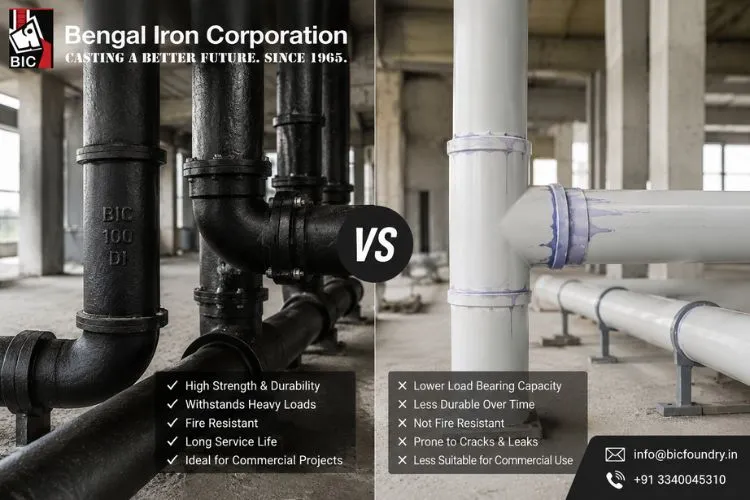
One of the biggest advantages of cast iron is its exceptional mechanical strength. Unlike PVC, which can deform under heavy pressure or impact, cast iron easily withstands the weight of multi-storey commercial buildings, underground installations, and heavy vehicle traffic.
- Excellent structural strength
- Minimal deformation over time
- Suitable for high-load applications
2. Superior Fire Performance
Fire safety is a major concern in commercial construction. PVC softens and may release hazardous gases when exposed to extreme heat. Cast iron, on the other hand, remains stable at high temperatures and helps limit fire spread.
According to the National Fire Protection Association (NFPA), selecting fire-resistant building materials contributes significantly to improving overall building safety.
3. Noise Reduction
No one enjoys hearing water rushing through walls in hotels, apartments, or hospitals. Cast iron naturally absorbs sound because of its density, making drainage systems much quieter than PVC installations.
This benefit improves occupant comfort while reducing the need for additional soundproofing materials.
Where Cast Iron Really Excels
Modern commercial developments require components that perform reliably for decades. Products such as Cast Iron Inspection Covers complement cast iron piping systems by providing durable access points capable of handling continuous traffic and harsh environmental conditions.
Similarly, many infrastructure projects also specify Recessed Drain Covers where appearance, safety, and heavy-duty performance are equally important.
Long-Term Value Beats Initial Savings
PVC often wins on upfront pricing, but lifetime ownership tells a different story. Cast iron systems generally require fewer replacements and significantly less maintenance over several decades.
Many commercial property owners discover that investing once in premium materials reduces future repair bills and unexpected downtime.
Why builders continue choosing cast iron:
- Long operational lifespan
- Excellent corrosion resistance with proper coatings
- High load-bearing capacity
- Outstanding acoustic performance
- Reliable performance in demanding environments
Sustainability Matters More Than Ever
Environmental responsibility has become a priority for today’s construction industry. Cast iron is one of the world’s most recycled engineering materials. Existing pipes can be melted and reused without losing their mechanical properties, supporting sustainable construction practices.
The U.S. Environmental Protection Agency (EPA) continues to encourage material recycling to reduce landfill waste and conserve natural resources.
When PVC May Still Be a Good Option
To be fair, PVC does have advantages in specific situations.
- Light residential plumbing
- Temporary construction projects
- Low-budget renovations
- Applications with minimal structural loading
However, for commercial buildings where reliability, longevity, and safety are priorities, cast iron remains the preferred solution.
Also Read: The Engineering Behind Long-Lasting Cast Iron Manhole Covers
Frequently Asked Questions
Q. Why do commercial buildings still prefer cast iron pipes?
A. Because cast iron offers greater durability, better fire resistance, lower noise transmission, and longer service life than PVC.
Q. Are cast iron pipes environmentally friendly?
A. Yes. Cast iron is highly recyclable and can be reused repeatedly without compromising its structural strength.
Q. Is cast iron worth the higher initial investment?
A. Absolutely. Lower maintenance costs and a longer lifespan often make cast iron more cost-effective over the lifetime of a building.
Q. What projects benefit most from cast iron drainage systems?
A. Commercial buildings, hospitals, hotels, educational institutions, industrial facilities, and infrastructure developments benefit the most from cast iron piping systems.
Final Thoughts
Choosing between cast iron and PVC isn’t simply about comparing prices—it’s about selecting a system that will continue performing for decades. For commercial projects where durability, fire safety, noise control, and long-term reliability are essential, cast iron consistently proves its value. BIC remains committed to supplying premium cast iron drainage solutions that meet the evolving demands of modern construction while delivering confidence for years to come.
Blog Development Credit
This blog was developed with research support from ChatGPT and Google Gemini, combining current industry insights, technical knowledge, and content best practices. The article was carefully reviewed, refined, SEO-optimized, and prepared for publication by Bengal Iron Corporation to deliver accurate, informative, and reader-focused content for professionals and customers alike.