
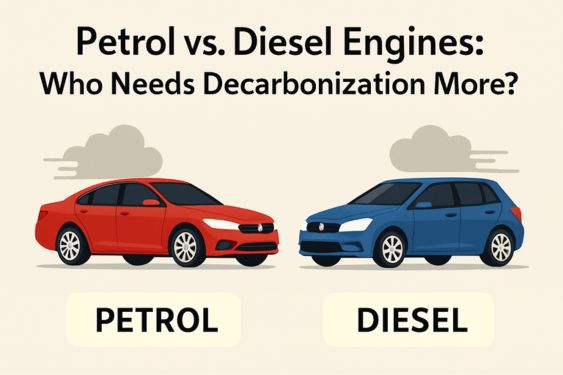

Is your engine choking more than it should? Whether you drive a petrol-powered sedan or a diesel-chugging SUV, carbon build-up is slowly sabotaging your engine’s performance. But here’s the real kicker — not all engines suffer equally. So, between petrol and diesel, which one needs decarbonization for cars more urgently?
The Carbon Culprit: What’s Really Going On Under the Hood?
Over time, unburned fuel, oil vapors, and exhaust gases leave behind carbon residues that cling to your engine’s components. Think of it as cholesterol clogging an artery — except it’s your car’s heart that’s struggling. The result? Sluggish acceleration, reduced fuel efficiency, and a check engine light that won’t quit.
Also Read: গাড়ির ডি-কার্বনাইজেশন: শুদ্ধ বাতাসের প্রতি একটি ছোট্ট পদক্ষেপ
Why Petrol Engines Suffer (But Still Cope)
Petrol engines use spark ignition and typically run cleaner than diesel. That’s because the combustion process is hotter and burns off more deposits. However, modern petrol engines, especially those with direct injection (GDI), have a little secret — they tend to build carbon on the intake valves since fuel no longer washes them clean. It’s like brushing your teeth without rinsing!
- GDI engines are more prone to intake valve gunk.
- Lower soot production means longer intervals between cleaning.
- Octane quality matters — poor fuel = more carbon.
Diesel Engines: Built Tough, But Dirtier
Diesels, on the other hand, are torque monsters — ideal for hauling and long drives. But their Achilles’ heel? Soot. Diesel combustion is less complete, and emissions systems like EGRs and DPFs end up recycling those unburnt particles back into the engine. That’s like trying to purify water using dirty filters. Messy, right?
- More carbon soot due to cooler combustion and higher compression.
- DPF clogs and EGR issues are common without regular cleaning.
- Diesel fuel quality and short trips accelerate build-up.
So, while diesel engines are stronger workhorses, they’re undeniably more carbon-prone. This makes diesel vehicles more urgent candidates for routine decarbonization.
Signs It’s Time to Decarbonize
Whether you run on petrol or diesel, here are a few red flags to watch out for:
- Loss of throttle response or power.
- Increased fuel consumption despite the same driving pattern.
- Rough idling, engine knocking, or misfires.
- Excess black smoke from the exhaust — especially in diesel.
If these sound familiar, your car may be due for a deep breath of fresh air — literally.
Who Should You Trust for Decarbonization?
This isn’t a job for your neighborhood mechanic with a can of carb cleaner. You need someone who specializes in comprehensive, non-invasive engine cleaning. That’s where Doctor Vahaan comes in. Known for expert decarbonization services in Kolkata, they use state-of-the-art hydrogen cleaning tech to breathe life back into engines — without dismantling them.
Also Read: PPF Is the New Must-Have for Luxury Cars
So… Petrol or Diesel: Who Needs It More?
Here’s the deal — both engines need decarbonization. But diesel engines, with their soot-heavy combustion and emissions hardware, typically require it more frequently. That doesn’t let petrol cars off the hook, especially GDI models that quietly gather grime in hard-to-reach places.
The best move? Treat your engine like your own lungs — don’t wait until it’s wheezing. Whether you drive 10 km a day or cross states weekly, schedule decarbonization every 15,000–20,000 km or once a year for optimal performance.
FAQs
Q1. Is decarbonization safe for modern engines?
Yes, when done professionally. Modern decarbonization uses non-invasive methods like hydrogen cleaning, which safely removes carbon without damaging engine parts.
Q2. Can fuel additives replace decarbonization?
Fuel additives help reduce carbon formation but aren’t a replacement. They’re good as a preventive measure, but not for engines already suffering from carbon overload.
Q3. How long does a typical decarbonization service take?
Most hydrogen-based decarbonization procedures take around 30–60 minutes, depending on your vehicle’s condition and engine type.
Q4. Does decarbonization improve mileage?
Absolutely. Many car owners report a 5–15% improvement in fuel economy after a decarbonization service, especially in diesel vehicles.
Final Thoughts
Carbon is inevitable, but neglect isn’t. Whether you drive a petrol hatchback or a diesel beast, regular decarbonization is key to keeping your engine clean, efficient, and breathing easy. Trust pros like Doctor Vahaan to handle it right — and give your ride the detox it deserves.