



The Hidden Danger of Peer Pressure Around Water: What To Do
 16 Feb 2026
  Water Safety
Why Peer Pressure and Water Don’t Mix
Peer pressure is powerful. Whether it’s daring a friend to jump off a rock, teasing someone for being “too scared,” or saying “the water’s not that deep,” these words can push people into situations where the stakes are literally life and death.
Unlike other forms of peer pressure, water-related dares carry immediate risks. Water depth changes unexpectedly. Lakes hide underwater hazards. And swimming ability can be overestimated in a moment of adrenaline.
The False Sense of Safety in Lakes and Open Water
Many believe lakes are safer than oceans because they lack big waves. But lakes are unpredictable—depths can drop off suddenly, currents may exist, and visibility is low. What looks like “safe water” can quickly become dangerous.
“Don’t Be a Chicken”: How Words Can Push Someone Into Danger
It’s common to hear taunts like “Don’t be a chicken” or “Everyone else is doing it.” What sounds like harmless teasing can pressure someone into doing something their instincts tell them not to. That’s when accidents happen.
Friends and Family: When Encouragement Turns Harmful
The saddest part? The pressure often comes from friends or relatives—people who care about us. They don’t intend harm, but in their excitement, they forget the dangers. What starts as “fun” can leave lifelong regret.
Real-Life Example: Lessons From a Weekend at the Lake
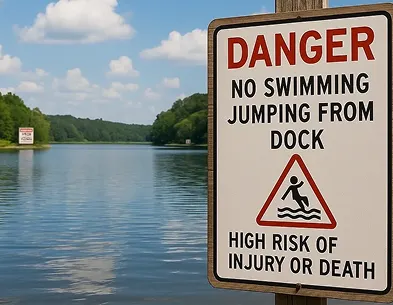
Two weeks ago, during a camping trip, I noticed something troubling. People were urging their friends—who couldn’t swim—to wade farther into the lake, climb tall structures, and jump off.
Despite warning signs posted everywhere—listing deaths, injuries, and past tragedies—the encouragement continued. It was heartbreaking to watch relatives and friends urging risky behavior, unaware they were placing loved ones in serious danger.
Signs Are Posted for a Reason
Signs about drowning and injuries aren’t just for show. They’re placed where people have lost their lives before. Ignoring them is gambling with fate.
Why People Ignore Safety Warnings
Sometimes it’s overconfidence, sometimes it’s the desire to “fit in.” Often, people think: “That won’t happen to me.” But tragedies don’t discriminate.
The Consequences of Risky Water Behavior
Drowning Statistics in Lakes and Rivers
According to the CDC, drowning is the second leading cause of unintentional injury death for children ages 1–14. Many occur in natural water settings like lakes and rivers.
Injuries From Jumping Into Shallow or Unknown Water
Diving or jumping into lakes can cause spinal cord injuries, broken bones, or concussions. Hidden rocks, sudden depth changes, and underwater debris create unseen hazards.
Emotional Toll on Families and Communities
Every drowning leaves behind devastated families. Friends who pressured someone into jumping often live with guilt for years. A moment of laughter can lead to a lifetime of pain.
What You Should Do When You Hear Someone Encouraging Risk
Speak Up—But Stay Calm
Don’t ignore it. A simple, firm statement like: “This isn’t safe, please don’t do it.” can make a difference.
Offer a Safer Alternative
Suggest something fun but safe—floating near the shore, playing a water game, or wearing life jackets.
Get an Authority or Lifeguard Involved
If the situation escalates, don’t hesitate to involve park rangers, lifeguards, or authorities. Better a friend annoyed than a friend lost.
Lead by Example: Show Safety First
People follow what they see. Model good water safety—stay close to shore, wear a life vest, and show that fun doesn’t require risks.
Building a Culture of Water Safety
How to Encourage Responsible Fun
It’s not about stopping fun—it’s about keeping fun safe. Teach kids and adults alike that safety is strength, not weakness.
Teaching Kids and Teens About Risks Early
The earlier children understand water risks, the less likely they are to give in to peer pressure later.
Why Swimming Lessons Save Lives
Swimming lessons not only build skill but also confidence. A confident swimmer is less likely to be pressured into unsafe behavior.
Waterview Swim’s Commitment to Safer Swimming
Our Mission in Water Education
At Waterview Swim, we believe every person should enjoy the water—but with respect for its risks.
How We Empower Swimmers and Families
We provide education, training, and awareness so that families can swim safely, confidently, and responsibly.
Frequently Asked Questions (FAQs)
Q1: Why do people encourage risky behavior near water?
A: Often it’s excitement, overconfidence, or peer pressure—not malice. But the consequences can still be deadly.
Q2: What should I do if friends pressure me to jump into a lake?
A: Trust your instincts. If it feels unsafe, don’t do it. Speak up or walk away.
Q3: Are lakes more dangerous than pools?
A: Yes. Lakes have hidden hazards, unpredictable depths, and no clear visibility, unlike pools.
Q4: How do I stop someone without embarrassing them?
A: Use calm, respectful language: “I care about you, and this isn’t safe.”
Q5: Do warning signs really mean someone died there?
A: Most often, yes. Signs are placed after past incidents. They’re there to prevent history from repeating.
Q6: What’s the best way to keep kids safe at lakes?
A: Constant supervision, life jackets, and teaching water safety from a young age.
Conclusion: Be the Voice of Safety, Not Silence
Next time you hear someone urging a friend to take a dangerous risk in the water—speak up. Don’t let laughter drown out safety. Peer pressure may be powerful, but your voice of caution could save a life.
At Waterview Swim, we believe safety is strength. Together, we can build a culture where water fun doesn’t come with hidden tragedy.
Recent Posts