
Grey Cast Iron: Why it’s still important?

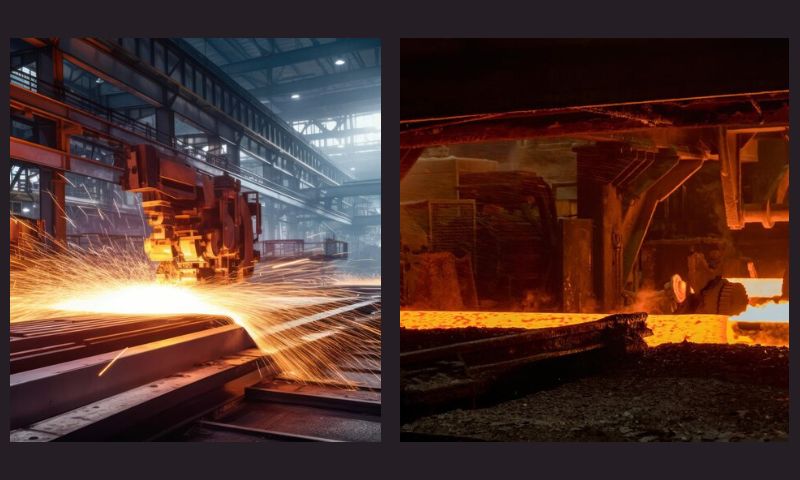
Grey cast iron belong to the oldest and most used materials for casting production. They have good foundry qualities and with continuous improvement of production technology they have achieved also suitable utility properties which have shown with increased of technical level and working reliability of castings.

grey-cast-iron_products_infographic


1.  Fire Safety: The prospects of fire in a building with PVC pipes can not only result in pipe repair but full replacement. That is because plastic can offer little to no protection in the presence of such heat. In contrast, cast iron pipes are fire resistant and can prevent the spread of fires. Another issue when it comes to fire is that when that plastic burns, it ends up emitting fumes that can be dangerous to breathe for anyone who unfortunately happens to be in the vicinity.

2.  Durability & Longevity: Compared to plastic, iron always has the upper hand when it comes to durability as well as longevity. Iron is denser and does not break or deform easily on rough handling as one sees in construction sites. Cast iron piping has been used successfully in plumbing systems for hundreds of years. In fact, in the year 1623 cast iron pipe was installed in the Fountains of Versailles in France. That same piping is still functioning today. Thousands of miles of municipal water and sewer systems use cast iron pipe. The reason is long-term durability. Cast iron simply lasts.

3.  Cost: Upfront although PVC products might be cheaper, the added cost of hanger spaces and expansion joints related to the pipes, the cost can exceed that of cast iron. Additionally, repairing cast iron sewer pipe is less frequent, which means that the money that might otherwise be invested in keeping them running can be used for other things.

4.  Noise Factor: One of the biggest complaints when it comes to PVC pipes is that the noise from them is much more pronounced than with cast iron models. In the latter case, the chief reason for the much quieter atmosphere is because of the thickness and density of the pipe involved, which offers a lot more serenity for a homeowner. That’s not something that will occur with PVC, where the running of a faucet, the turning on of a shower or the flushing of a toilet can be heard through the walls every time. That can quickly become an annoyance, especially for someone who plans on staying in their home for an extended period of time.

5.  Environmental Concerns: In order to minimize our environmental footprint, cast iron pipes would be the choice. The reasons are because PVC pipes are made with oil-based products and any PVC pipe repair usually discards the material into the trash. Meanwhile, cast iron pipes can be recreated from scrap iron.

Excessive noise and vibration are associated with equipment used in the mining, extraction, engineering equipments and processing of mineral resources. High vibration degrades structural components, often leading to huge economic failures and loss of productivity.

Grey iron has the ability to withstand thermal cycling well. Thermal cycling is where the component goes back and forth between warmer and colder temperatures. While thermal cycling can create stress and premature failure in some types of metal castings, grey iron has proven to endure the strain of thermal cycling quite well and not stress as easily.


References:

https://www.irbnet.de/daten/iconda/CIB_DC25341.pdf — Page 247

https://valsir-uneeq.co.za/EN/index_htm_files/MT_SCARICO_L02-345-1_GB.pdf — Table 2.8
Pattern Making Process

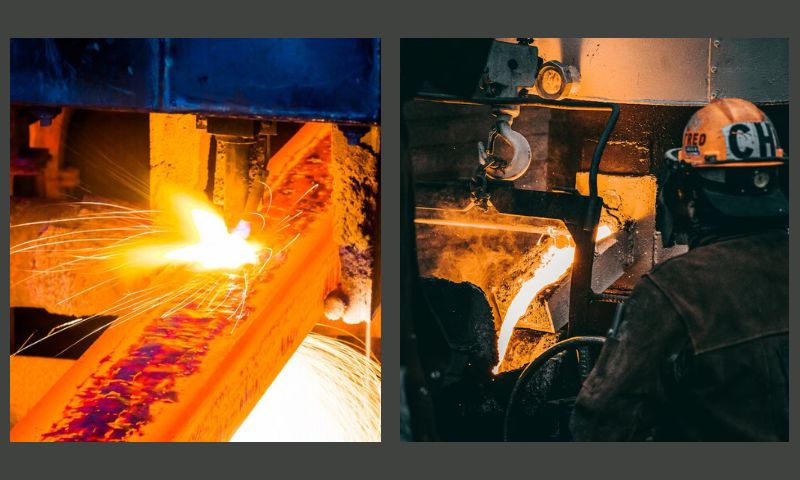
Development of patterns is the first step in the casting process. Patterns can be re-used to make more moulds and, if looked after, can last for many years making thousands of moulds.

For producing a mould or impression of desired shape in moulding sand, one needs to have a wooden or metallic pattern similar to the shape of the mould. The art and science of designing the pattern is called pattern making.

Common Metals that are used for creating patterns are –

  • Wood
  • Metal
  • Plaster
  • Plastic

Types of Pattern-Making Process

The type of patterns selected for a particular casting depends upon many factors such as type of moulding process, number and size of casting difficulty of moulding on account of design or typical shape of casting. The most common types of pattern are listed and described below:
(a) Solid or Single Piece Pattern
(b) Split Pattern
(c) Gated Pattern
(d) Sweep/Skeleton Pattern
(e) Match Plate Pattern

(a) Solid or Single Piece Pattern

The one piece or single pattern is the most inexpensive of all types of patterns. This type of pattern is used only in cases where the job is very simple and does not create any withdrawal problems. It is also used for application in very small-scale production or in prototype development. This type of pattern is expected to be entirely in the drag and one of the surface is is expected to be flat which is used as the parting plane. A gating system is made in the mold by cutting sand with the help of sand tools.

(b) Split Pattern

Split or two piece pattern is most widely used type of pattern for intricate castings. It is split along the parting surface, the position of which is determined by the shape of the casting. One half of the pattern is molded in drag and the other half in cope. The two halves of the pattern must be aligned properly by making use of the dowel pins, which are fitted, to the cope half of the pattern. These dowel pins match with the precisely made holes in the drag half of the pattern.

(c) Gated Pattern

Gated patterns are a group of patterns in which multiple castings are connected through a common gating system. In this type, runners and gates are integrated directly into the pattern, allowing molten metal to flow into several mould cavities simultaneously. This method increases production efficiency and reduces moulding time, making it highly suitable for mass production. Gated patterns are commonly used when producing small components in large quantities.

(d) Sweep/Skeleton Pattern

Sweep and skeleton patterns are used for producing large and symmetrical castings, where making a full solid pattern would be expensive and impractical.

A sweep pattern consists of a template (usually wooden) that is rotated around a central axis to generate the desired mould shape in sand. It is commonly used for circular or cylindrical shapes like pipes and tanks.

A skeleton pattern, on the other hand, is a framework that outlines the shape of the casting. The mould is formed by filling sand around the framework and finishing it manually. These patterns are economical and suitable for large castings produced in small quantities.

(e) Match Plate Pattern

Match plate patterns are used for high production work and are ideal for machine moulding processes. In this type, both halves of the split pattern are mounted on opposite sides of a single plate (called the match plate). The gating system, including runners and gates, is also attached to the plate.

This arrangement ensures accurate alignment of the cope and drag sections, reduces moulding time, and improves productivity. Match plate patterns are widely used in automated foundries for producing large numbers of identical castings with high precision.

Enquire Now

Get In Touch
×
Best Cast Iron Supplier Top Ductile Iron Manufacturer