
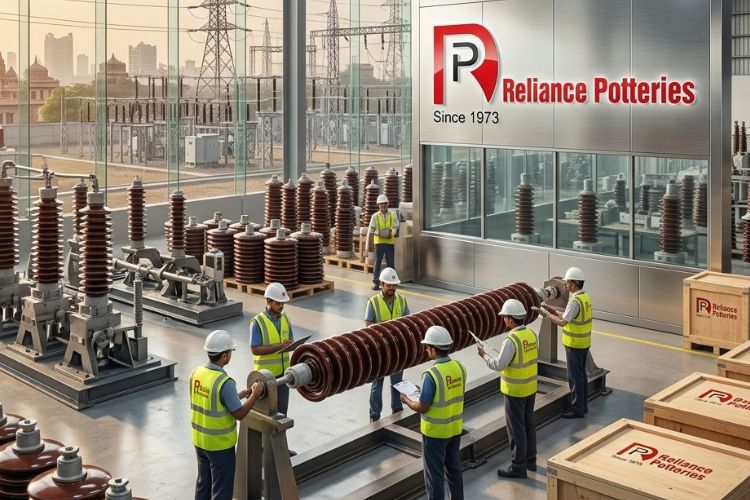

Electricity powers almost every aspect of modern industry, yet few people stop to think about the components that keep electrical systems safe and reliable. Industrial electrical insulators are among those unsung heroes. Whether in power stations, substations, manufacturing plants, or transmission networks, these specialized components prevent unwanted current flow and protect equipment from costly failures.
As industries continue to expand their electrical infrastructure, the demand for high-quality insulators has grown significantly. This is why many businesses rely on trusted Electrical Insulator Manufacturers in India to ensure long-term performance, safety, and operational efficiency. Understanding how these components work can help engineers, procurement teams, and facility managers make smarter decisions.
Also Read: The Importance of Thermal Resistance in Industrial Insulation Components
What Are Industrial Electrical Insulators?
An electrical insulator is a material designed to resist the flow of electric current. In industrial environments, insulators separate energized conductors from grounded structures or other conductive parts. Without them, electricity would follow unintended paths, potentially causing equipment damage, outages, or safety hazards.
Common insulating materials include porcelain, glass, and advanced polymer composites. Each material offers unique advantages depending on operating conditions, voltage levels, and environmental exposure.
Why Are Insulators Essential in Industrial Applications?
Think of an insulator as the traffic controller of an electrical system. While conductors allow electricity to move where it is needed, insulators ensure it stays on the correct route. This simple yet critical role supports the stability of entire power networks.
Key Benefits of Industrial Insulators
- Electrical Safety: Prevent accidental current leakage and reduce shock risks.
- Equipment Protection: Minimize flashovers and electrical faults.
- System Reliability: Maintain consistent power transmission and distribution.
- Cost Savings: Reduce maintenance expenses and downtime.
According to information published by the U.S. Department of Energy, improving grid reliability remains a major priority worldwide, and insulation systems play an important role in maintaining dependable electrical infrastructure.
Common Types of Industrial Electrical Insulators
1. Pin Insulators
Typically used on distribution lines, pin insulators support conductors mounted on poles. They are well-suited for moderate voltage applications and are known for their durability.
2. Suspension Insulators
These insulators are often found in high-voltage transmission systems. Multiple units can be connected together to accommodate increasing voltage requirements.
3. Post Insulators
Used extensively in substations and switchyards, post insulators provide both insulation and mechanical support for electrical equipment.
4. Bushing Insulators
Bushing insulators allow conductors to safely pass through grounded barriers such as transformer tanks or switchgear enclosures. In large power projects, selecting a reliable HV Bushing Manufacturer in India is often a critical part of equipment procurement planning.
How Material Selection Impacts Performance
Choosing the right insulating material is not simply about electrical resistance. Environmental factors often have an equally important influence.
- Porcelain: Excellent mechanical strength and long service life.
- Glass: Easy visual inspection and strong dielectric properties.
- Polymer Composites: Lightweight, contamination-resistant, and increasingly popular in modern installations.
Many industrial facilities still favor porcelain insulators because of their proven reliability in demanding operating environments. For structural applications requiring exceptional strength, a trusted Solid Core Insulators Manufacturer can provide solutions designed for heavy-duty performance.
Factors That Influence Insulator Lifespan
Even the highest-quality insulators experience wear over time. Several factors contribute to their service life:
- Exposure to industrial pollution and contaminants.
- Extreme temperature fluctuations.
- Mechanical loading and vibration.
- Moisture, salt deposits, and coastal conditions.
- Improper installation or maintenance practices.
Routine inspection programs help identify early signs of deterioration before they develop into expensive failures. Preventive maintenance remains one of the most effective strategies for maximizing asset longevity.
Emerging Trends in Insulation Technology
The electrical power industry continues to evolve rapidly. Utilities and industrial operators increasingly seek solutions that combine durability, reduced maintenance, and improved environmental performance.
Recent research from organizations such as the IEEE highlights growing interest in smart grid infrastructure, advanced dielectric materials, and improved contamination-resistant designs. These developments are helping engineers build more resilient power systems capable of supporting future energy demands.
Keywords such as porcelain insulators, high-voltage insulation systems, and substation insulators continue to gain relevance as industries modernize their electrical networks.
Frequently Asked Questions
What is the primary function of an industrial electrical insulator?
Its main purpose is to prevent unintended electrical current flow while safely supporting conductors and equipment within power systems.
Why are porcelain insulators widely used?
Porcelain offers excellent mechanical strength, strong dielectric properties, and reliable performance in harsh environmental conditions.
How often should industrial insulators be inspected?
Inspection frequency depends on operating conditions, but many facilities perform routine visual and electrical assessments annually or during scheduled maintenance shutdowns.
Can damaged insulators affect power system reliability?
Yes. Cracked, contaminated, or degraded insulators can increase the risk of flashovers, outages, and equipment failures.
Also Read: Best Transformer Bushing Manufacturer Guide 2026
Final Thoughts
Industrial electrical insulators may not receive much attention outside engineering circles, but they are fundamental to the safety and efficiency of modern power systems. From transmission lines to substations and industrial plants, these components quietly protect equipment, personnel, and infrastructure every day. Investing in quality insulation solutions is ultimately an investment in long-term reliability.
Blog Development Credits
This article was planned and refined by Reliance Potteries. Research support and content development utilized advanced AI technologies including ChatGPT, Google Gemini, and Copilot, while final SEO review, editing, and optimization were completed by Reliance Potteries.