
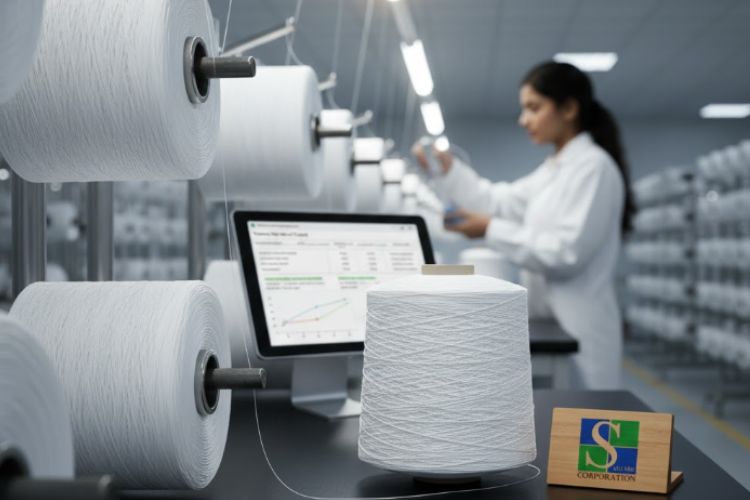

Ever wondered why some fabrics feel effortlessly soft yet drape like a dream? The answer often hides in the yarn itself. In today’s fabric market, customization isn’t a luxury—it’s an expectation. Brands want yarns that behave a certain way, feel a certain way, and tell a certain story. That’s where a custom-focused viscose yarn partner quietly makes all the difference.
Working with a specialized Viscose Yarn Manufacturer allows fabric producers to fine-tune performance, texture, and appearance right from the fiber stage. Instead of adapting designs to off-the-shelf yarn, manufacturers can finally flip the script and let yarn adapt to the fabric vision.
Also Read: Why Organic Fibers Are Essential for Sustainable Textile Production
What Makes Viscose Yarn So Adaptable?
Viscose yarn sits at a fascinating intersection of nature and engineering. Derived from cellulose—usually wood pulp—it carries a plant-based origin while allowing extensive process control. That combination gives manufacturers room to experiment without sacrificing consistency.
The natural advantages manufacturers love
- Breathability with elegance: Viscose fibers absorb moisture efficiently, making fabrics feel cooler and more comfortable.
- Silk-like aesthetics: The natural sheen adds visual depth without the cost or fragility of silk.
- Dye friendliness: Colors tend to appear richer and more uniform, especially in fashion and home textiles.
According to data summarized by the Food and Agriculture Organization (FAO), regenerated cellulose fibers like viscose continue to gain traction as brands look for alternatives that balance comfort, scalability, and resource efficiency. The takeaway is simple: viscose isn’t a compromise—it’s a strategic choice.
The Real Value of Custom Viscose Yarn Manufacturing
Customization goes far beyond adjusting thickness. A seasoned manufacturer works almost like a technical collaborator, not just a supplier. This is particularly important when fabrics are designed for specific end uses—flowy dresses, structured upholstery, or high-blend industrial textiles.
Common customization parameters include:
- Denier and filament count: Influences drape, strength, and texture.
- Twist levels: Alters fabric hand-feel, from airy softness to firm resilience.
- Lustre control: Matte, semi-dull, or bright finishes for different aesthetic goals.
In practice, this means designers don’t have to “design around” yarn limitations anymore. Instead, yarn becomes a responsive building block—one that supports creativity rather than restricting it.
Why Fabric Brands Prefer Specialized Indian Manufacturers
India’s textile ecosystem is uniquely positioned for custom yarn manufacturing. The country combines deep technical expertise with scalable infrastructure, making it easier to move from sample to bulk without quality drift.
Many global buyers already collaborate with Fabric Manufacturers in India because yarn customization integrates seamlessly into downstream fabric production. When yarn specs and fabric requirements align early, wastage drops and timelines tighten—in a good way.
A report referenced by IBEF notes that India’s textile value chain benefits from close coordination between yarn producers and fabric mills, helping brands maintain both cost control and consistent quality across collections.
Sustainability and Responsibility in Viscose Yarn
Let’s be honest—modern buyers care about impact, not just appearance. Responsible viscose production focuses on sourcing-certified pulp, closed-loop chemical recovery, and efficient water management. While no process is perfect, transparency and continuous improvement matter.
- Certified forestry inputs reduce pressure on natural ecosystems
- Process optimization lowers energy and water consumption
- Traceability builds trust with conscious brands
Custom manufacturers are often better positioned here because smaller, tailored batches allow closer monitoring and process adjustments.
FAQs About Custom Viscose Yarn Manufacturing
Can viscose yarn be customized for blended fabrics?
Yes. Custom viscose yarn is frequently engineered to blend smoothly with cotton, polyester, linen, or modal, improving fabric balance and performance.
Is custom viscose yarn suitable for large-scale orders?
Absolutely. Once specifications are finalized, manufacturers can scale production while maintaining consistency across lots.
How does customization affect fabric quality?
It usually improves it. When yarn properties align with fabric application, issues like pilling, uneven dyeing, or stiffness are reduced.
Are sustainable options available in viscose yarn?
Yes. Many manufacturers now offer responsibly sourced viscose options with improved environmental controls and certifications.
Also Read: BCI Yarn Trends in Eco-Conscious Fashion 2026
Final Thoughts
Custom viscose yarn manufacturing isn’t just a technical upgrade—it’s a mindset shift. When yarn is treated as a design partner rather than a commodity, fabrics gain personality, performance, and purpose. In a crowded textile market, that quiet advantage often speaks the loudest.
Blog development Credits:
This article was thoughtfully planned, researched, and refined by Square Corporation, using advanced AI-assisted research and editorial expertise, with final SEO structuring and quality enhancements guided by their consulting team.