Maintenance of Grey Iron Flanges: Everything You Must Know

We all know grey iron or cast iron (CI) pipes are a vital pipeline component. Hence, proper maintenance of CI pipes is essential to ensure the stable, long-term functioning of the pipeline system. The following are effective ways to maintain cast iron flanges in optimal condition. Contact a reputable CI pipe manufacturer in India if you are also searching for top-notch cast iron pipes and fittings.

5 Key Aspects of Maintaining the Cast Iron Pipes

Are you familiar with the key aspects of maintaining the cast iron pipes? Go through the next segment to learn how to upkeep the cast iron pipes further.

Regular Evaluation & Inspection of Cast Iron Pipes

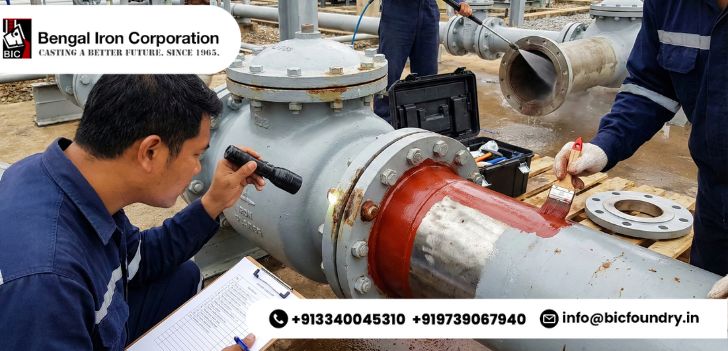
The first significant method for maintaining cast iron pipes is regular inspection and evaluation. Regular inspections of the pipe surface are necessary to check for leaks, cracks, rust, and other damage. At the same time, it’s essential to examine the pipeline interface sealing to ensure there is no leakage.

You can conduct crucial performance evaluations based on the working environment and service life of the pipeline. Using professional testing methods, assess key indicators, including pipeline corrosion resistance and pressure-bearing capacity. All these offer a basis for subsequent upkeep and maintenance.

Perform Anti-Corrosion Treatment on Grey Iron Pipes

Another notable way to maintain CI pipes is to perform anti-corrosion treatments. Since CI pipes transport corrosive media, internal anti-corrosion treatments are necessary. These treatments can enhance the corrosion resistance of the pipeline’s internal wall. Very similar to internal anti-corrosion treatment, external anti-corrosion treatment is also a pivotal part of CI pipes maintenance.

Wrapping with anti-corrosion layers, coating with anti-corrosion paints, and other methods can isolate the pipeline from the outer atmosphere, preventing recurring corrosion. At the same time, for buried pipelines, it’s crucial to consider the soil environment’s impact on the pipeline and to implement complementary anti-corrosion measures. To get a fair idea of the hubless cast iron pipe price list, contact our experts now.

Unclog & Clean the CI Pipes

Regular cleaning and unclogging of pipes is essential to maintaining them in optimal condition. Regularly remove impurities, sediments, etc., from the pipeline to prevent them from affecting the medium’s normal flow. You can use mechanical cleaning, high-pressure water flushing, and other methods for this. For blocked pipelines, you must use regular dredging methods, such as chemical or physical dredging.

Repair & Replace CI Pipes

When we talk about maintaining the CI pipes, we can’t ignore the need to repair and replace them. For local issues such as rust and cracks, repair, welding, and other methods can be helpful. While fixing the pipes, ensure the repair materials are compatible with the original pipeline components.

You should also ensure that the quality of pipe repair meets relevant standards. For severely obsolete grey iron pipes that can’t be repaired, it’s better to replace them promptly as a whole. When replacing pipes, always select high-quality pipes and fittings that meet the required specifications to ensure the new pipeline’s service life and quality. You can contact a leading manufacturer to check out the hubless cast iron pipe price list.

Emergency Response & Archive Management

Last but not least, the crucial aspect of maintaining the CI pipes is emergency response and archive management. Develop an extensive pipeline archive management network to record pipeline materials, service life, specifications, and maintenance records. You should also focus on creating a comprehensive emergency response plan that you can quickly activate in the event of ruptures, leaks, and other emergencies. These practical measures can help control the situation as a whole and reduce impacts and losses.

Wrapping Up

In summary, the maintenance and ongoing upkeep of cast iron pipes and fittings is a systematic project that requires several of the aspects mentioned above. Through these maintenance and upkeep measures, you can ensure the stable, long-term functioning of CI pipe networks, providing strong support for production across different sectors. Get in touch with Bengal Iron Corporation, one of the best CI pipe manufacturers in India, if you are also looking for precision-engineered cast iron pipes and fittings. With a broad spectrum of top-grade products, our business is highly diverse. If you are also interested in our products, feel free to reach out to us.
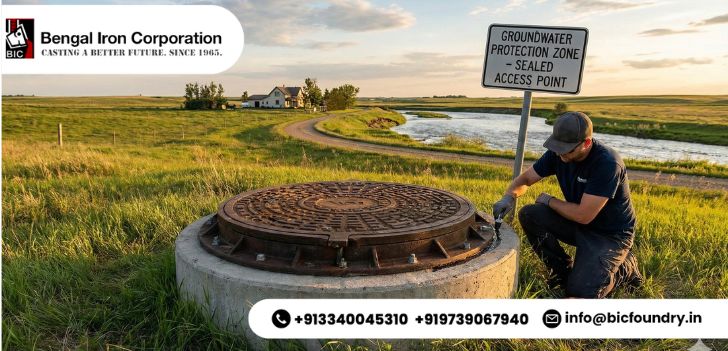
Why Sealing Access Points is Essential for Groundwater Safety

It is a crucial natural resource that provides clean water for drinking, agriculture, and industry. When the surface water becomes scarce, groundwater stored in aquifers acts as a reliable substitute. However, human activities, agricultural runoff, and poor waste management have been known to contaminate this vital natural resource, affecting its quality and safety. You can make the best cover for safety with the help of the best cast iron factory.

Perhaps the most common, and preventable, source of contamination in groundwater comes through unsealed or improperly sealed access points, affording a conduit for contaminants to get into our aquifers via wells, boreholes, and pipelines. It is for this reason that these need to be sealed properly in order to ensure the purity of groundwater, prevent possible health risks, and further continue to make use of this resource sustainably for the future.

Reason for Sealing Access Points is Critical to Groundwater Safety

It is one of the major sources for drinking and irrigation purposes, but highly susceptible to contamination through unsealed wells or pipelines. These are access points that should be properly sealed to guard the quality and sustainability of the groundwater resource.

Prevents the ingress of contamination

Open gaps offer an easy avenue for dangerous pollutants-such as pesticides, fertilizers, sewage, and industrial waste-to seep directly into groundwater. Such unregulated access is one of the most threatening possibilities regarding water safety. This is a hazard to the health of the citizens because substances like these can then defile the purity of our life-giving water and result in serious health problems for the communities. You can keep the water safe with the help of the best manhole cover near me.

Aquifer integrity protection

Sealing effectively prevents one aquifer from contaminating another, thus keeping deeper groundwater sources very clean. It therefore plays a major role in the natural purity of these water-bearing layers of the earth’s crust, ensuring their integrity and preserving the resources concerned.

Supports legal and environmental compliance

Most environmental regulations require that abandoned wells and boreholes be carefully sealed in compliance with strict safety standards. The practice not only helps in maintaining and safeguarding the general public and their health but is also of prime importance in preventing the pollution of useful groundwater. Proper sealing methods will avoid the access of pollutants to underground water sources, hence protecting the ecosystem and preserving the integrity of our drinking water.

It minimizes the amount of infiltration from surface water

Flooding and heavy rainfall can very easily and quickly transport harmful chemicals, bacteria, and debris into open or poorly sealed wells. This presents an extremely serious threat to the safety of groundwater utilized for drinking and irrigation. Well sealing acts like a form of protective barrier in that these contaminants will be kept at bay, ensuring this precious groundwater remains uncontaminated and free of surface pollutants.

Prevents structural damage

Sealing effectively enhances the integrity of the well structure and prevents erosion that could lead to the collapse of the boreholes around the structure. These careful procedures indeed keep the system strong, resilient, and at the same time, ensure continued efficiency in its operation over time. The efficacy of sealing carefully guards against elements and natural wear to conserve functionality and resilience in these vital systems, standing firm against the challenges of their environment.

Conclusion

Sealing access points is one of the most important simple measures that can be undertaken in the protection of groundwater against contamination and structural damage. Ensuring that all wells and boreholes are correctly sealed protects a critical resource for ecosystems, agriculture, and communities now and in perpetuity.

How Pipe Roughness Affects Flow Efficiency Over Time

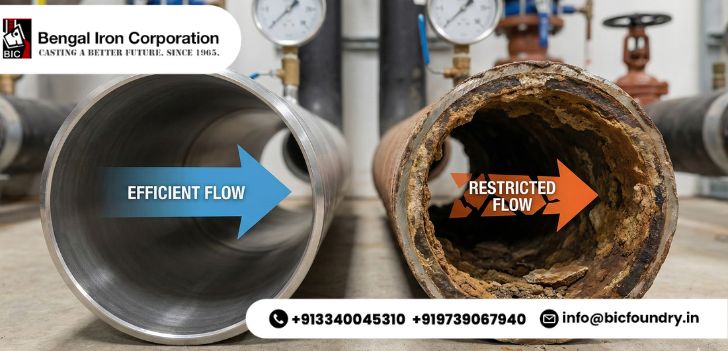
Pipe roughness has a tremendous impact on piping system fluid flow efficiency. It is the inherent imperfections on the inner surface of a pipe that creates fluid flow resistance. New pipes, specifically smooth pipes like PVC or copper, have zero or negligible resistance and therefore good flow. In the long term, corrosion, scaling, and sedimentation can lead to greater roughness causing higher friction and lower flow. With the best hubless cast iron pipe catalogue, you never encounter any piping issue.

With pipe roughness, friction resistance and pressure drop increase, leading to loss of energy in the system. Increased pumping power must be provided, and associated costs, as well as affect performance. In others, even the flow rate decreases at the same pumping power. It is hence important to observe how pipe roughness varies with time. It is crucial for good, cost-effective operation of fluid conveyance systems.

Various Methods Through Which Pipe Roughness Affects Long-Term Efficiency of Flow

Pipe roughness is the irregular surface on the inside of the pipe that enhances resistance to fluid movement. Roughness is created through deposition and corrosion of sediment and causes elevated friction losses, reduced efficiency of flow, heightened pressure drops, and greater energy consumption.

Definition of pipe roughness

Pipe roughness refers to the minute defects and irregularities of the pipe’s inner surface. Minute defects warp otherwise smooth fluid flow, generating resistance and energy dissipation, which can be quantified as the fluid passes through the pipe.

The cumulative effect of the disturbances over time may be the diminishment of fluid transport efficiency, and therefore the importance of IS 3989 pipe roughness to enhance fluid dynamics in systems.

Energy loss and pumping cost

The more the internal roughness of a pipe, the more is the fluid flow friction loss. Larger roughness corresponds to higher turbulence, and therefore more energy is utilized in pumping at the same flow rate. In the long term, this additional energy requirement is also reflected in the form of increasing operating cost and reduces overall efficiency of flow, influencing performance as well as use of resources.

Reduced flow rate

Increased roughness with static pumping power unquestionably results in lower flow velocity and discharge. This is at the cost of high system performance, particularly in systems of high pipeline or distribution length.

Maintenance and material selection

The anticorrosive such as PVC, HDPE, and stainless steel need to be used in order to be capable of controlling the rise of roughness effectively. Descaling and general cleaning are fundamental processes that can regain efficiency by a large extent very easily. Coatings such as epoxy lining are highly capable of preventing any kind of rise in roughness.

Long-term performance impact

Flow efficiency will get increasingly worse as time goes on. Progressive roughness-avoiding systems will experience catastrophic pressure deficits or poor flow at arrival points. Thus, pipe systems are created by designers with a “roughness allowance” to maintain optimal performance and integrity.

Conclusion

Pipe roughness in general has a significant impact on long-term fluid flow performance. After pipes are worn and inner surfaces are roughened by corrosion, scaling, or deposition, friction resistance will be greater and energy loss and lower flow rates will be apparent. Not only does it decrease the system efficiency, but also running and maintenance expenses are raised. It should be prevented from creating roughness by ongoing cleanup, i.e., corrosion-resistant materials, and checking for smooth flow in the long run.

Urban Drainage Design: How Standard Dimensions Simplify Maintenance

If you think deeply, you can understand that the infrastructure of an urban city does not depend on skyscrapers and flyovers; it depends on a compact drainage system. It might be beyond your line of sight, but its significance affects the city’s smooth operation.

Whether it is about preventing floods, managing wastewater, or keeping urban roads functional, an effective drainage system is essential. If you are dealing with an urban development authority and choose a reliable SG iron castings manufacturer for a compact drainage system, you must ensure the proper dimensions are used.

A standard dimension of the drainage system is highly important to keep the urban drainage system smooth and hassle-free.

Let’s explore this blog to learn how standard drainage design dimensions simplify maintenance of the urban drainage system.

Why Is the Standard Dimension Vital for Drainage Design?

Urban drainage design is an important part of robust infrastructure. A properly designed drainage structure can maintain smooth urban movement. It is vital to ensure every component of the drainage system has proper dimensions, especially the drain cover. Standardized dimensions for drain covers across the city improve structural efficiency during installation and routine maintenance.

Significance of Standard Dimensions for the Drain Cover

Before buying reliable, high-quality recessed drain covers India urban development authorities should understand the significance of standard dimensions for drain covers. Let’s discuss it in detail.

1. Faster maintenance and less downtime

If you have installed an irregular-sized drain cover, it can negatively hamper the urban infrastructure during heavy flooding. Workers waste many hours trying to find the right drain cover for a poorly sized one.

With standardized drain cover dimensions, the crew can quickly clean the drainage area and restore water flow more quickly. Apart from that, it is also useful for smooth traffic movement and for reducing labor costs.

2. Proper inventory management

Any urban city deals with thousands of drain covers, which means a single dimensional mistake can result in costly replacements. If you want to reduce the maintenance cost, you must focus on a sufficient stock of fewer spare sizes.

It also supports order replacements from multiple suppliers and reduces cost per unit through bulk procurement. It helps urban development authorities to avoid a minute scramble.

3. Better safety and durable load capacity

If a drain cover has proper dimensions, it is highly useful for carrying heavy loads and ensuring safety. Properly sized drain covers distribute vehicle loads effectively and prevent displacement, cracks, and collapse.

Each urban loads have a specific load-bearing capacity. Pedestrian zones and commercial driveways need specific drainage cover dimensions to ensure people’s safety. It is highly useful for reducing road accidents and extending the lifespan of drainage infrastructure.

4. Seamless design of the drain cover

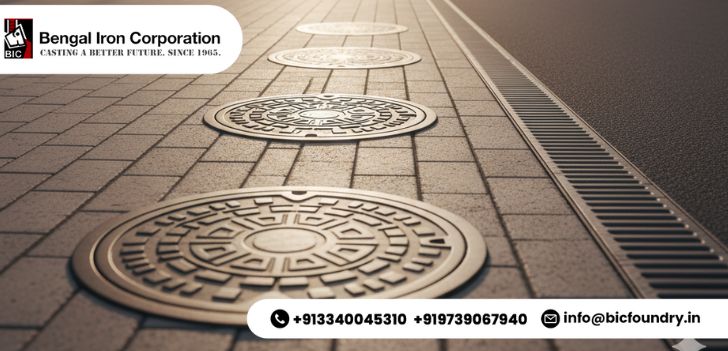
When you search for “manhole cover near me” on urban roads, you must focus on design uniformity. It is vital to give your urban road an attractive appearance with a functional, correctly sized manhole cover.

A standard dimension manhole cover maintains a proper alignment with pavements, tiles, and curbs. It not only enhances the aesthetic appeal of the urban area but also provides clear pathways for urban residents.

5. Cost efficiency for urban authority

As we all know, cost efficiency is a vital factor for urban development authorities. Every urban development authority focuses on reducing the costs of urban development and maintenance. In such cases, choosing the right dimension drain cover can reduce replacement costs, thereby saving on urban development costs.

Conclusion

If you want to ensure a smooth urban life with minimal maintenance costs, you have to focus on durable, properly dimensioned manhole covers. Contact Bengal Iron Corporation to buy the right-sized manhole cover for the durable drainage infrastructure in the urban areas.

How Anti-Slip Drain Covers Reduce Workplace Accidents

A slippery floor is one of the greatest threats in industrial workplaces, especially in manufacturing plants and chemical processing units. But industrial units often overlook the main factor that is responsible for slippery floors. It happens because of poor-quality drainage covers that allow water or chemical liquids to enter the ground. In such a challenging situation, an anti-slip drain cover should be the perfect solution.

To ensure the complete protection of your industrial workers, incorporate an anti-slip drain cover from a reliable cast-iron factory. The unique design of the anti-slip drain cover provides a strong grip, supports heavy loads, and prevents sudden slips. It is highly essential to reduce operational downtime and financial loss.

Let’s explore this blog to know how anti-slip drain covers reduce workplace accidents and ensure workers’ safety.

Working Potentiality of Anti-Slip Drain Covers

A premium-quality anti-slip drain cover is essential for industrial safety and to prevent workplace injuries. Let’s discuss its working potential in detail-

1. Higher traction for vehicles and footwear

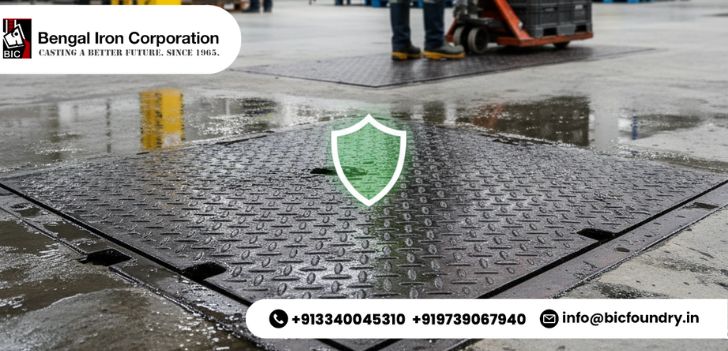
High-friction features and anti-slip patterns, such as textured surfaces and serrated edges, help maintain grip on the oily or wet surface. This unique working mechanism of the anti-slip drain cover can reduce accidents caused by spilled oil and lubricants, run-off rainwater, and pipeline leaks.

2. Prevent water overflow

Traditional drain covers are prone to clogging and water logging, increasing the risk of slippery surfaces and delaying production.

After the introduction of an anti-slip drain cover, the drainage system becomes faster, resulting in anti-clogging benefits.

3. Ensure stability in heavy-duty areas

Industrial areas mainly experience pallet truck movements, heavy carts, and production machinery. If you have a poor-quality drain cover in your industrial area, it can create uneven surfaces and dangerous edges.

If you choose a reliable ductile iron castings manufacturer to buy a cast iron anti-slip drain cover, it should be hugely beneficial for you. It can maintain structural stability and give adequate support to industrial traffic. This stability is highly essential to prevent workplace hazards and protect workers’ lives from major accidents.

4. Reduction in workplace downtime

If your industrial areas experience major accidents due to a sudden slip, the costs can be massive, including higher medical expenses, lost productivity, insurance claims, and serious legal issues.

In such a situation, a premium-quality anti-slip drain cover can ensure floor safety, fewer injuries, lower operational costs, and better productivity.

5. Safe surface in the processing industry

Food processing, chemical, pharmaceutical, and automotive workshops mainly deal with sudden spills on the floor. In such a critical structure, an anti-slip drain cover made from premium-quality cast iron provides complete protection against oil, grease, and chemicals.

If you search on Google for the best anti-slip manhole cover near you, you will definitely find a huge number of options. But choosing a premium-quality cast-iron anti-slip manhole cover manufacturer should be vital for you.

Conclusion

At the end, we must say it is high time to upgrade your industrial unit with a premium-quality anti-slip drain cover. It not only safeguards your operational efficiency but also enhances your brand value. Contact Bengal Iron Corporation to purchase the highest-quality anti-slip drain cover for a safe industrial workplace.

Utility Hole vs Inspection Chamber: The Major Differences

In construction and other parts of underground and public works, access structures have a vital function. These structures are essential for the inspection and servicing of drainage, sewers, and utility lines. Both utility holes and inspection chambers are examples of access structures. Both these structures are different in design, functionality, dimensions, and form. Still, they serve the same purpose of offering access to underground drainage systems.

Each set of divergences is standalone and serves a purpose that is helpful for developers, utility planners, and civil engineers. Bengal Iron Corporation is a renowned brand that manufactures top-grade access structures. So let’s assess the significant differences between utility holes and inspection chambers along with their respective use cases. Search for the term ‘manhole cover near me’ to receive top-quality manhole covers for your intended use.

The Major Differences between an Inspection Chamber & Utility Hole

Do you know the significant differences between inspection chambers and utility holes? Then go through the next segment to learn how utility holes and inspection chambers are different from each other.

Purpose

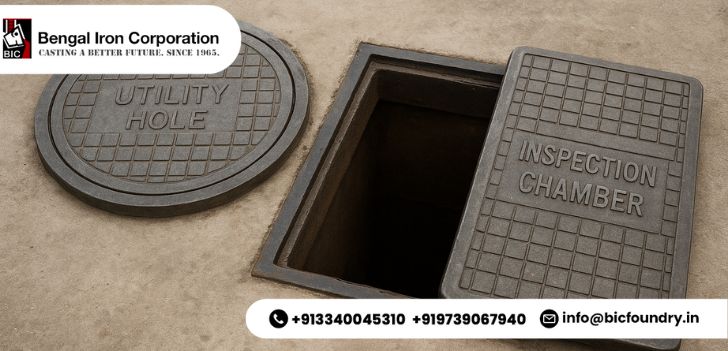
The first notable factor that makes both utility holes and inspection chambers different is their purpose. Utility holes or manholes refer to a vertical access point developed in underground drainage and utility networks. Manholes feature specific designs that enable people to enter, clean, inspect, maintain, and repair them. Manholes are essential components for city roads, footpaths, and industrial complexes.

On the other hand, inspection chambers are small access point that allows visual assessment and cleaning for equipment. However, entering inspection chambers is not possible. Inspection chambers are ideal for residential or light-duty drainage systems to assess junctions and flow directions.

Size & Depth

Another significant aspect that differentiates both utility holes and inspection chambers is their size and depth. Manholes are usually bigger in size so that individuals can pass with ease. Based on the intricacy of the network, one can install utility holes at greater depths. In comparison, inspection chambers are shallower. They are less than 1 meter deep with narrow and small openings. If you are also looking for superior quality manhole covers, search for the term ‘manhole cover near me’.

Construction Materials

Construction materials are another deciding factor that helps differentiate utility holes and inspection chambers. There are two major types of materials used to make inspection chambers and utility holes. One is cast iron and the other is ductile iron. Both these components can differ in terms of load-bearing capacity and the positions of installation, such as residential driveways, pedestrian areas, and heavy traffic roads.

Applications

Both utility holes and inspection chambers are different based on their applications. How? Manhole covers or utility covers are appropriate for utility tunnels, telecom vaults, and municipal sewer networks. You can position them at regular intervals or put them at pipe junctions and alter their directions.

Inspection chambers on the other side are ideal for private residential drainage, such as inspection connections from the kitchen or bathroom to the main sewer line. Inspection chambers are perfect for areas where maintenance is not necessary frequently. Always get in touch with a reputable cast iron factory to buy high-quality maintenance hole covers with up to 70% cost savings.

Accessibility & Maintenance

Do you know that utility holes are manually accessible? For this reason, maintenance teams can easily enter the system and conduct the inspection. In the case of inspection chambers, they can be accessed through cameras. It’s because inspection chambers do not support human entrance and thus are ideal for getting equipment and cleaning roads.

FAQs

Q. What is the main difference between manholes and inspection chambers?

A. The main difference between utility holes and inspection chambers is the allowance of human entry for inspection. Human entry is possible in utility holes but not in inspection chambers.

Q. Which materials are ideal for making manholes and inspection chambers?

A. Cast iron and ductile iron are used to make both manhole covers and inspection chambers.

Q. Can I replace manholes with inspection chambers?

A. Absolutely not, manholes are suitable for human entry. However, inspection chambers are unable to handle the depth and load requirements of utility holes.

The Closing Thoughts

Choosing the access type between an inspection chamber and a manhole relies on the use, depth, and utility maintenance of the utility system and drainage. Utility holes serve a purpose in massive public work projects, and this requires a person to be physically present. On the other hand, smaller private and residential projects require inspection chambers. Contact Bengal Iron Corporation if you are also searching for precision-engineered manhole covers. Being a reputable ductile iron castings manufacturer, we at Bengal Iron Corporation combine ductile iron and cast iron technologies to make sure that every access product offers unmatched efficiency and strength in corrosion-resistance and load bearing.

Enquire Now

Get In Touch
×
Best Cast Iron Supplier Top Ductile Iron Manufacturer